How WhatsApp Speeds Up the Solar Quote Process
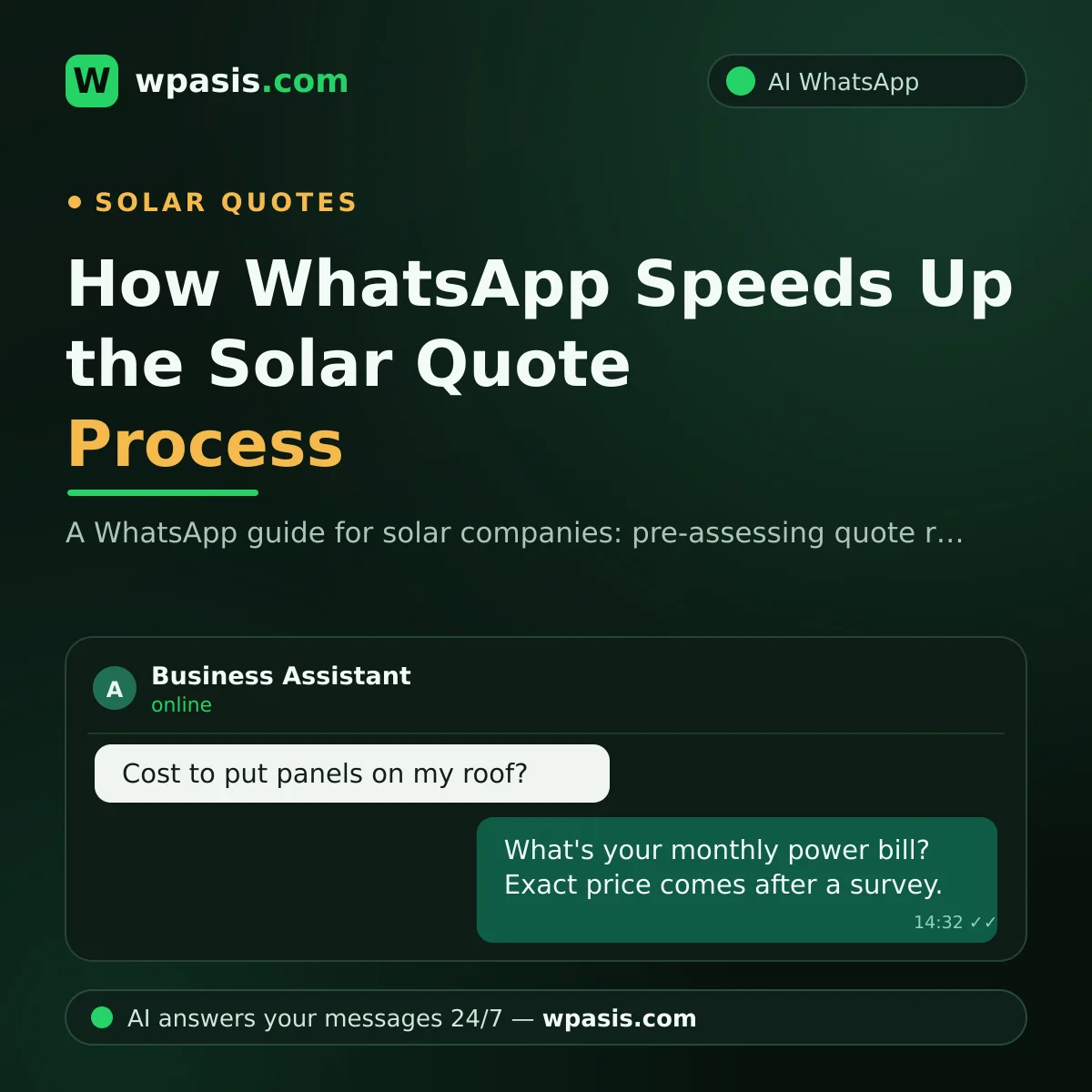
Solar quote requests carry a dilemma everyone in the industry knows: every message that comes in is potentially a big job, but a large share of them are only at the curiosity stage. The person writing "how much would it cost to put panels on my roof?" might be a serious investor, or might just be testing the waters. To find out which, you have to ask questions; and to ask questions, you need time. In this article, we'll look at how solar companies can filter and ripen the requests that come in over WhatsApp, and how to automate a pre-assessment using roof details and the power bill.
What's the Real Problem with Solar Quote Requests?
In the solar business, a quote doesn't settle in a single question the way a hairdresser's appointment does. For a sound pre-assessment you need to know at least:
- Installation site: detached roof, apartment block, land, or business premises?
- The roof's rough situation: orientation, pitch, shading, usable area
- Monthly electricity bill or consumption information
- The goal: self-consumption or investment?
- Location (city/area)
Without this information, any figure you give hangs in the air; a responsible firm won't give a firm price without a survey anyway. But here's the vicious circle: typing out those same five questions one by one on every new message is a job repeated maybe dozens of times a day. Suppose 20 quote enquiries come in a day and you spend an average of ten minutes messaging each; that's more than three hours of the day going purely on preliminary screening questions. And a portion of those exchanges are curious enquiries that will never turn into a survey.
The second face of the problem is delay. Someone thinking about a solar investment usually asks several firms for a quote at once. The firm that replies first and runs the process most tidily lands the survey appointment. While you're doing an installation in the field, the message left unanswered is often a customer going to a competitor.
How Does WhatsApp Solar Quote Pre-Assessment Work?
An AI assistant like WpAsis connects to your existing WhatsApp number with a QR code; no coding knowledge or technical setup required. The assistant is fed with your business's information and runs the early stage of the quote process on your behalf:
1. The first message is fielded instantly
The "what are your panel prices?" message finds a reply within seconds, even while you're up on a roof fitting panels. The assistant gently explains that the firm price will settle after a survey, and begins gathering information for the pre-assessment.
2. Roof details and the bill are gathered in the chat
The assistant asks, in order, the installation site, the roof's condition, the location, and the monthly bill range. The customer can also send a photo of their bill; everything sits together in the conversation record. This natural question-and-answer flow is far less off-putting than making the customer fill in a form.
3. Serious customers sort themselves out
Someone who completes a five-question pre-assessment is very likely someone taking the job seriously. And someone just testing the waters has still had a general briefing and left with a good impression — when they get serious later, you're the first firm they think of. Your time, meanwhile, goes only to matured requests.
4. The site survey gets scheduled
For a customer whose preliminary information is complete, the assistant asks their preferred days for a survey. You see the request from the panel and confirm the appointment. Sending an automatic reminder as the survey day approaches cuts down on wasted field trips; for teams heading out of the area to survey, that's a serious saving in fuel and time.
5. You take over at the decision stage
Presenting the quote, negotiation, and technical detail discussions are your job. You monitor every conversation from the panel and take over the chat whenever you like. The assistant makes no price commitment in your place; it brings you a customer already prepared.
Incentive and Regulation Questions: Drawing the Line Right
The unchanging question in solar conversations is this: "Are there government incentives, what do the regulations say?" This area changes often and varies with the individual's situation; details like the type of connection, the scale of the installation, and the grid application affect the outcome.
The right approach here is to teach the assistant a general, cautious frame: it's soundest for it to say that the current state of incentives and regulations will be addressed at the survey meeting, and that for definitive information one should consult the relevant authorities and a professional. On any matter with a financial or legal dimension, the assistant — and you — not giving information that isn't certain protects your firm's credibility over the long run. For definitive information, always consult a professional, and steer your customer to do the same.
How well this line works depends on what you teach the assistant. Nail down in your knowledge base which question gets which answer, and which topic is steered onto the "to be discussed at the survey" list; we explained how in our business knowledge base guide.
The Daily Difference for a Team Working in the Field
At most solar firms, the person watching the phone is the same one who goes out to survey, or the team is small. The day-to-day payoff of an assistant-run setup is this:
- Messages don't pile up while you're installing. In the evening you have not a heap of unanswered messages but requests with their pre-assessment complete.
- Every customer gets the same quality of process. Even on a day when you're tired, you don't skip a question, because the assistant is asking them.
- Out-of-hours requests don't slip away. Homeowners mostly do their research in the evening; the assistant is open 24/7.
- A written record builds up. The roof and bill details the customer stated sit in the conversation history; you head to the survey with a ready file in hand.
The good part is that setting this up doesn't require launching a digital transformation project. For those who want to move in small steps, our digitalization roadmap for small businesses is a good starting point.
Frequently Asked Questions
Does the assistant give a price without a survey?
No. The assistant speaks only within the frame you've taught it and explains that the firm price will settle after a survey. Its job isn't to give a price but to gather pre-assessment information and prepare the survey appointment. Price and quote always stay in your control.
Can the customer send their bill over WhatsApp?
Yes; all messages, including a photo of the bill, are collected in the conversation record and viewed from the panel. That way you get a sense of consumption before the survey. Because you're working with documents containing personal data, mind GDPR (or your local data protection law) in your storage and sharing rules; consult a professional for definitive guidance.
What does the assistant answer to incentive questions?
We recommend teaching the assistant a cautious answer here: it's best for it to say that incentives and regulations change by person and by date, and that the current state will be addressed at the survey meeting. That way no false expectation is created. Definitive information should always be obtained from the relevant authorities and a professional.
How do I tell casual questions from serious customers?
A customer who completes the pre-assessment questions has been through a natural filtering process. Someone who shares their roof details and their bill is usually taking the job seriously. The assistant does this filtering without spending your time; you deal only with matured requests.
To manage the whole path from filtering quote traffic to the survey, and from the survey to the sale, in an orderly way, try connecting an AI assistant to your WhatsApp line. Visit wpasis.com for a free demo.